Padres vs Tigers: The Curious Case of Randy Vásquez
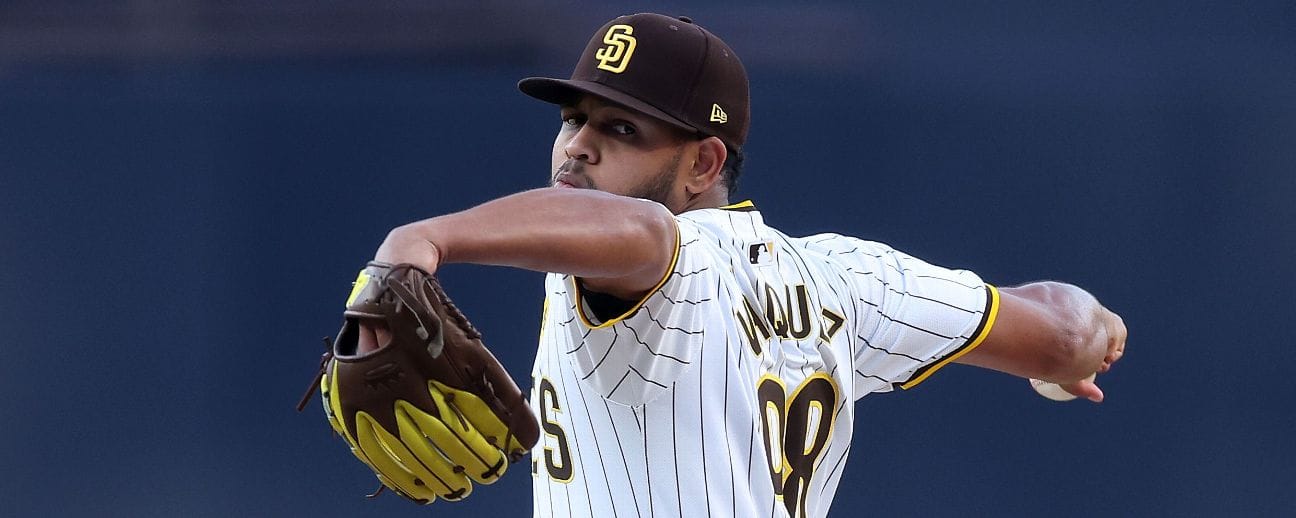
For those not familiar with his game, Randy Vasquez largely struggled to find his way as a consistent, productive starter during his first full year as an MLB starter in 2024 after coming to San Diego from the Yankees in the Juan Soto trade.
The twenty-six-year-old, who was once a top prospect, has proven to be someone the advanced metrics hate with a burning passion despite posting moderate numbers on the surface. In 2024, he pitched to the tune of a 4.87 ERA, but his xERA was a full run higher at 5.97 while his FIP and xFIP measured similarly at 4.29 and 6.31, respectively.
He generates fly balls at a much higher rate than ground balls, which in 2024 was largely due to his high usage of the 4-seam fastball compared to the sinker or cutter. A plausible explanation for this is that he had trouble commanding the sinker and cutter consistently, and would rather not give up walks at a high rate (proven true in the chart below). His Stuff+ grades measure at or below league average, resulting in Whiff and K rates in the lowest percentile across the bigs. Average "stuff" and the inability to generate swing-and-miss combined, hitters were able to create hard hit and barreled balls at a very high rate, resulting in the core reason his advanced metrics show so poorly.

Fast forward to 2025, and Vasquez is proving that he reinvented himself during the offseason, based on some arsenal changes and promising results despite the advanced metrics continuing to be critical of his work. In 4 starts, he's pitching to the tune of a stellar 1.74 ERA, but his xERA and FIP are still showing much higher at 5.71 and 4.29, respectively.
So what gives?


First, to address his year-to-year adjustments. He's dramatically decreased the usage of the 4-seam fastball and increased the cutter, which has now become his primary pitch. He's also determined that his most successful breaking pitch is the sweeper compared to his curveball, so he's heavily relying on the sweeper as his number two pitch, while mixing the curveball situationally. This new feature mix has helped the effectiveness of both his fastball and sinker pitches, each of which he uses 14% of the time. Due to hitters' focus on movement to the first base side of the plate from the cutter/sweeper combo, he's been able to create the elusive deception that was missing from his game in 2024 using the movement of the sinker and speed of the 4-seam. It's also worth noting that his velocity on the sinker and 4-seam has decreased nearly 2mph year-to-year, which is curious, as it's a big drop that seems intentional. Maybe it's due to his increased cutter usage, or maybe he and the staff found his pitches are more effective at these speeds; either way, it's something to continue monitoring.
These changes have significantly improved his effectiveness despite the advanced numbers hating on him, as he's now able to create weak contact at a high rate and limit barrels to a minimum. It's also helping his "Run Value" ratings per Baseball Savant, to flash red in a way they did not in 2024. He's still allowing more fly ball contact than ground balls and is actually creating less swing-and-miss than last season. Although the decreased strikeout rate is not a concern of mine, he's posting his highest walk rate of his career (6.10 BB/9, up from 2.66 in 2024). He's essentially become a pitcher who mixes his pitches well, creates soft contact, and aims to stay within himself without giving up too many free passes–so far, he's done this well.

To answer the second part of the Randy Vasquez equation, why do his advanced metrics (FIP, xFIP, xERA, xBA) look so poor compared to his actuals, and should we expect regression to the mean based on them?
I think we're at a pivotal point in the data collection and analysis of this curious phenomenon that we're witnessing. Sure, there are areas of concern, such as his high walk rate, the fly ball to ground ball ratio, combined with his slightly below average Barrel rate allowed, and the Stuff+ grading that indicates none of his pitches are above average. But the success he's had thus far in 2025 seems to be highly correlated with the average stuff and unpredictable pitch mix, which may be partially due to his lack of command, if not the obvious changes to pitch utilization.
Is it possible the league just needs time to adjust to the changes he made over the offseason? It's absolutely possible. Maybe two months from now, we'll look back and see his metrics have completely regressed to the mean as a result of the issues highlighted above.
It's also possible that much of his success has been due to the unpredictability in his new pitch mix and the "effectively wild" manner he's been pitching in. So, although he remains highly susceptible to being crushed by the talented hitters in the big leagues who have plenty of data to help identify pitcher trends, it might take them time to predict what he's going to do pitch-to-pitch, much less trying to pinpoint what he's going to do on a game-to-game basis so I think this success has a good chance to turn into something sustainable.
Right now, it's working well, and he's solidified himself in the Padres rotation that badly needs his depth. It's going to be fascinating to watch what plays out next. In an era where everything is measured and "predicted" using advanced analytics that diagnose underlying issues and should suggest regression or progression, maybe there is still a gray area where success can be found in a contradictory measure.
Padres @ Tigers
Randy Vasquez vs Keider Montero
This analysis, after four starts for Randy, brings us to Monday in Detroit vs a Tigers team that has jumped out to a fast start. However, the success the Tigers have found early has come in large part due to their pitching, which has been terrific and deep both on the starting staff and in the bullpen.
The Tigers' lineup has not seen any variation of Vasquez, let alone the redefined one. Although the wind appears to be blowing steadily out to left field for this matchup, I see Randy continuing his success of generating weak contact and limiting damage as long as he can create deception with pitch mix and doesn't fall victim to walks.
The Padres' offense has slowly been decimated by injuries over the first few weeks of the season, with Arraez joining the list of star players to go down after a scary collision on Sunday evening. Tigers' starting pitcher Keider Montero is not likely to dominate even the B lineup for San Diego, but he should find more success than facing the full-strength order, especially as no one in the Padres lineup has faced him in their career. Based on these obvious facts, I would not expect any kind of major outburst in runs scored here.
Both bullpens have been a strong suit so far and project near full strength for this matchup, so even if either starter runs into trouble, these units will likely be able to quell the storm.
Despite the advanced metric regression that is flashing on the screen for Randy Vasquez, my model projects this game's total at 7.93 runs.
This also factors in the wind blowing out to left field at over 10mph.
Pick: Under 8.5 -115 (down to 8 +100)